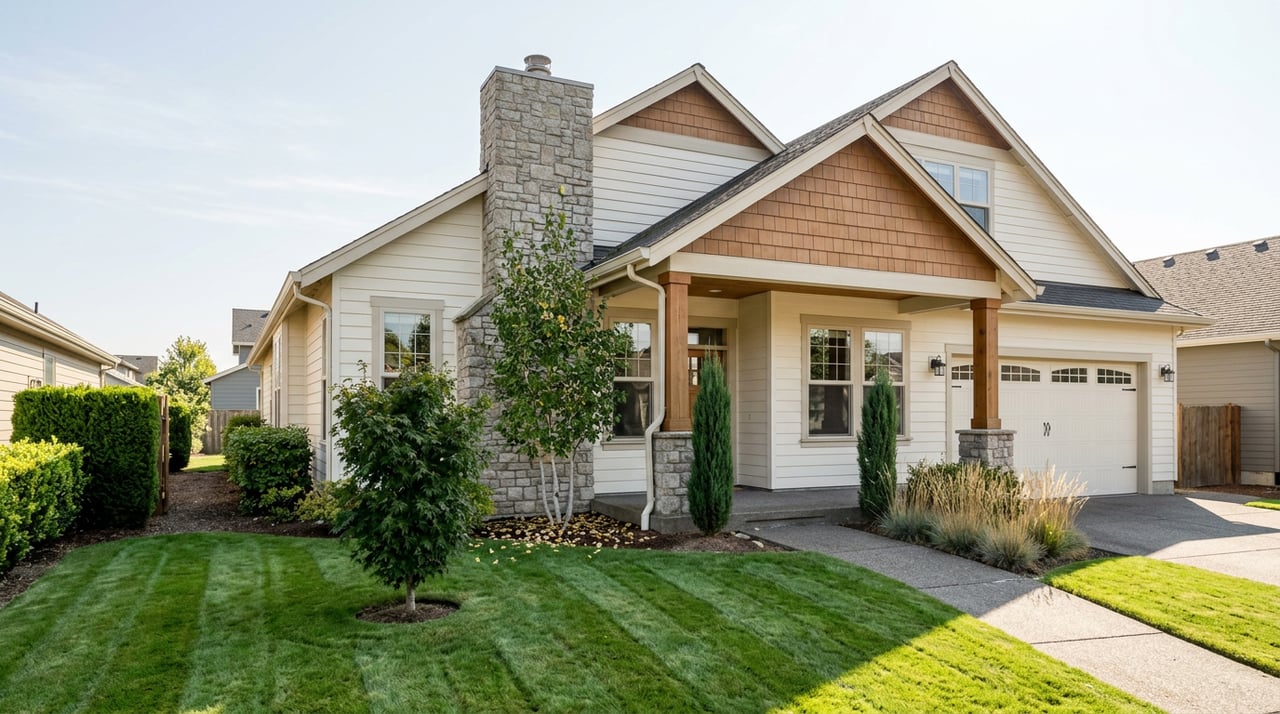
Two homes in Copperleaf can sit three streets apart, list for nearly the same price, carry the same HOA dues, and still send their owners two very different property tax bills every year. Not because one home is bigger or newer. Because of which filing number it happens to sit in.
That single fact upends the way most buyers compare Southshore, Copperleaf, and Tallyn's Reach. The instinct is to treat "the HOA fee" as the whole story, then move on to comparing amenities. In practice, the HOA fee is often the smaller number. The bigger, less visible one lives on the property tax bill, set by a metro district, and it can vary sharply even within a single community that shares one name and one clubhouse.
Copperleaf Isn't One Cost Structure. It's Eight.
Copperleaf is built out through eight numbered metropolitan districts, each formed to finance a specific phase of streets, parks, and utilities as the community grew. Each district sets its own mill levy every year, and the filed 2026 budgets show just how far apart those numbers land:
| Metro District | 2026 Total Mill Levy | 2026 Bond Portion |
|---|---|---|
| Copperleaf No. 4 | 55.602 mills | 53.414 mills |
| Copperleaf No. 5 | 36.166 mills | 32.407 mills |
| Copperleaf No. 8 | 60.000 mills | not itemized |
| Copperleaf No. 9 | 71.642 mills | 61.642 mills |
Compare the low end to the high end and District No. 9 carries almost double the mill levy of District No. 5. Two buyers can look at similarly priced Copperleaf listings, sign the same HOA paperwork, and end up paying meaningfully different property tax bills for the rest of their time in the home, purely based on which numbered district their parcel falls inside. The community's own district documents list these filings publicly, and it's worth pulling the specific one tied to an address before assuming a Copperleaf listing is priced like its neighbors.
The levies also move year to year in ways that don't follow a simple script. District No. 5's total mill levy actually fell, from 60.000 mills in 2025 to 36.166 mills in 2026, even as a bond portion appeared in the levy for the first time. District No. 9 moved the opposite direction, climbing from 67.858 mills to 71.642 mills in the same one-year window, with its bond obligation growing alongside it. A rising mill levy isn't automatic just because a district issues debt, and a district paying down debt doesn't guarantee the total goes down either. Each district's own budget resolution is the only reliable way to know which direction a specific parcel is heading.
What a Mill Levy Is Actually Paying For
Metro districts exist because building streets, water lines, and clubhouses for a new neighborhood costs money before there's a tax base to pay for it. The district solves that by issuing municipal bonds, which come with lower interest rates than private construction loans because bondholders don't pay federal or state income tax on the interest. The district repays those bonds over time through the mill levy on your property tax bill, collected by the county treasurer rather than chased down door to door the way an HOA has to pursue unpaid dues. Unpaid mill levy amounts become a lien on the property, which is part of why districts can borrow cheaply in the first place.
The City of Aurora caps how far a district can push this. Under the city's model service plan for metro districts, a district's debt-repayment mill levy is limited to 50 mills and its operating mill levy to 20 mills, a combined ceiling of 70 mills unless City Council grants an exception. Copperleaf District No. 9's 2026 total of 71.642 mills sits right at that boundary, which is worth understanding before assuming the levy has more room to climb.
Southshore's Math Is Already Settled
Southshore runs on a different structure entirely. Its HOA charges a flat $30 a month, covering trash service, covenant enforcement, design review, and the social committee that runs neighborhood events. The Lighthouse and Lakehouse community centers, the shoreline trails, and the marina infrastructure along Aurora Reservoir were built separately, financed by the Southshore Metropolitan District through bonds issued in 2020. Residents approved that debt by a vote of 270 to 70 back in May 2018, and the district repays it through its own mill levy, a line on the tax bill that sits apart from the $30 HOA charge entirely.
The detail that matters most for a buyer today: Southshore's final new homes sold in 2025. That means the lot count feeding the district's tax base is fixed, the community isn't adding new debt for new construction, and the fiscal picture a buyer steps into now is largely a known quantity rather than one still being written. Copperleaf, by contrast, is still building out toward a buildout that could reach roughly 2,369 detached homes, which is exactly why its eight metro districts sit at such different points in their own repayment timelines. Full detail on how Southshore's district structure works is public on the Southshore Metro District's own site.
Tallyn's Reach Carries Its Own Version of the Same Story
Tallyn's Reach layers its own metro district assessment on top of the county and school district portions of the tax bill, funding park and sidewalk maintenance across a community known for its mature tree canopy. It's zoned to Cherry Creek School District's Black Forest Hills Elementary, Fox Ridge Middle School, and Cherokee Trail High School.
The premium for that structure shows up in current pricing. Aurora's citywide median for single-family homes sits at $535,000 as of August 2026, while Tallyn's Reach, with its newer construction and metro-district-funded parks and trails, carries a median closer to $810,000. That gap is the clearest evidence that a metro district isn't just an abstract line on a tax bill. It funds the specific amenities, the trails, the ponderosa pines, the maintained sidewalks, that buyers are paying a real premium to get, on top of whatever the mill levy itself adds to the annual bill.
How to Actually Check This Before You Write an Offer
- Look up the specific metro district or districts tied to a parcel through the Arapahoe County Assessor's mill levy records rather than assuming the community name tells you enough.
- Ask for the district's current year budget and mill levy resolution. Most special districts post these publicly, the same way Copperleaf's numbered districts do.
- Request a full property tax breakdown from the title company or lender before closing, one that separates the county, school, city, and metro district portions rather than showing a single bundled estimate.
- For homes in an actively developing filing, ask whether the district's bonds are still being issued or further along in repayment. That trajectory shapes whether the levy is more likely to rise or fall in the next few years.
- Compare total carrying cost, HOA dues plus the metro district mill levy converted to an annual dollar figure, rather than comparing HOA fees alone across neighborhoods.
The Real Question Isn't Which Neighborhood
The comparison that actually matters in Southeast Aurora isn't Southshore versus Copperleaf versus Tallyn's Reach. It's which specific filing, which numbered district, and where that district sits in its own bond schedule. That's the kind of detail that doesn't show up in a listing photo or an HOA disclosure summary, and it's exactly the sort of thing worth pulling before you get attached to a house.
If you're comparing homes across these communities and want the district-level breakdown pulled alongside the comps, Heather Christensen Real Estate can walk through the specific numbers tied to any address you're considering. You can also start with a home valuation if you're weighing a move within Southeast Aurora, browse current Aurora listings, or get in touch directly, and join my SE Aurora community for the local updates that don't make it onto a portal listing.
A Few Questions Worth Asking First
Does a lower monthly HOA fee always mean a lower total housing cost? Not necessarily. HOA dues and metro district mill levies are collected separately and show up on different bills. A small monthly HOA number can sit next to a much larger annual mill levy that never appears in the same line item.
Will a metro district's mill levy always climb over time? No. Copperleaf District No. 5's total levy fell from 60.000 mills to 36.166 mills in a single year even as a new bond portion appeared, because its operating levy dropped enough to offset it. The direction depends on each district's own budget, not a fixed trajectory.
How do I find which metro district a specific home falls into? Address-level mill levy assignments are public record through the Arapahoe County Assessor and through each district's own filed budget documents. Both are worth checking before an offer goes in, not after.