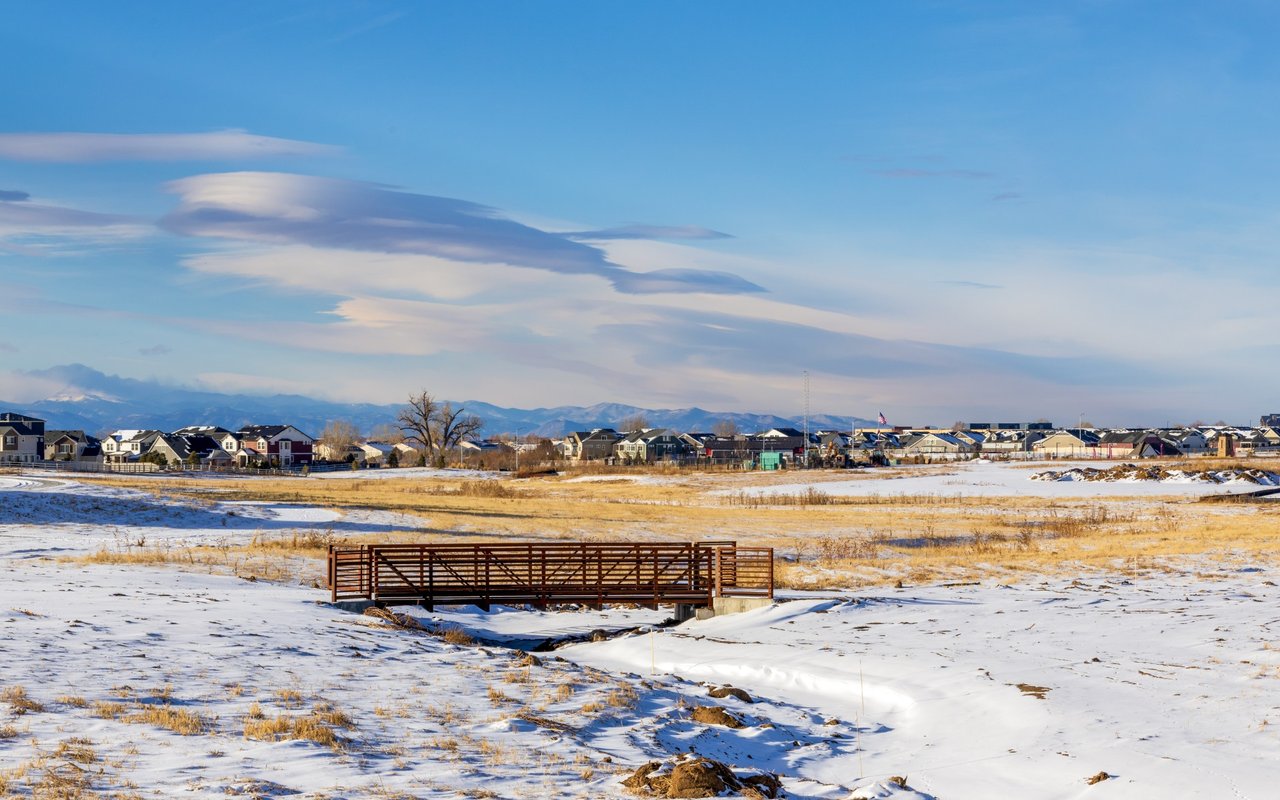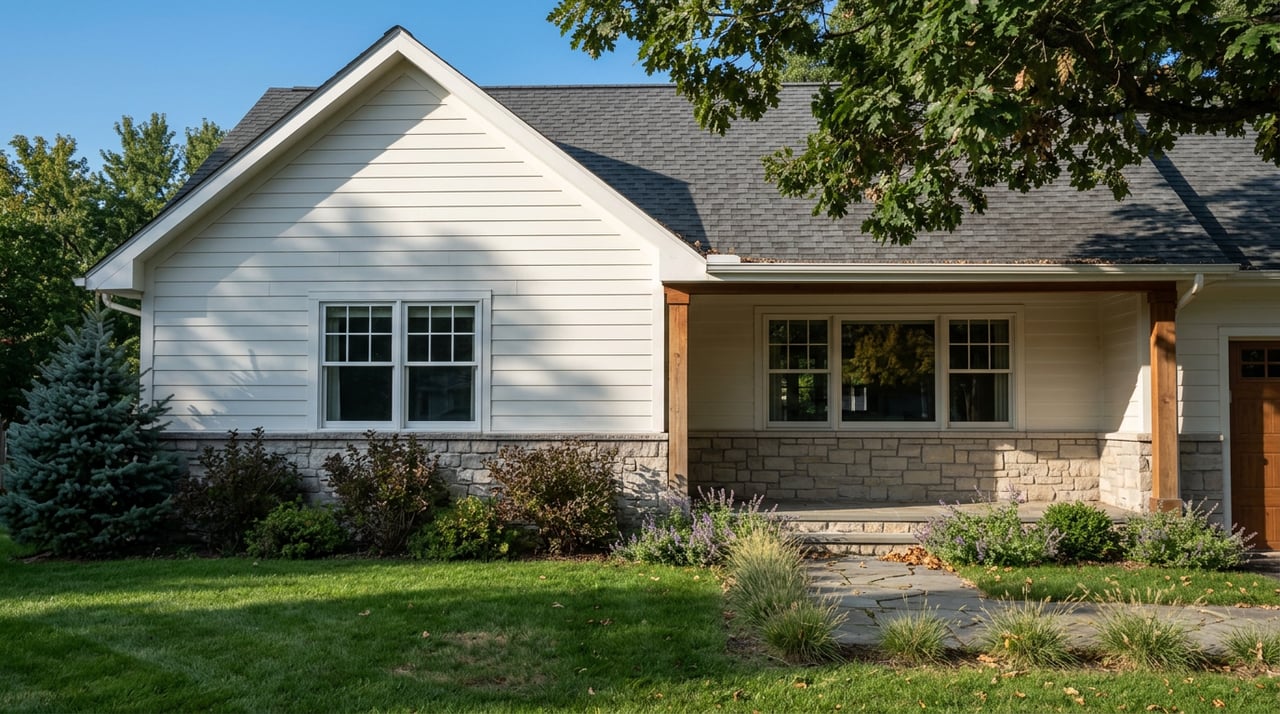
Walk into a 1930s bungalow a few blocks off Main Street in Historic Downtown Littleton and you can usually tell within the first ten minutes what decade you're standing in. The fir floors are original. The basement ceiling is low enough to duck under. Somewhere near the water heater there's a run of pipe that's gone the dull gray of galvanized steel, and out at the curb there's a sewer line that predates the interstate.
That same house, on that same block, is currently one of the best-performing pieces of real estate in the city. Not despite its age. Alongside it.
That's the part sellers in Littleton's older neighborhoods tend to get backward. They assume a home inspection on a pre-1970s property is a threat to the sale price. The local data over the past several months says something more specific: buyers are pricing in the character and walkability of these blocks ahead of the plumbing, which changes how a seller should prepare, not whether they should worry.
The number that doesn't match the story
Citywide, Littleton has cooled from its peak. For the three months ending May 2026, the median sale price sat at $629,000, down slightly from the same period a year earlier, and homes were taking about 18 days to sell compared with 12 days the year before. Looking at a longer six-month window through July 2026, tracked closings put the median a bit higher, at $635,000, with the middle half of sales landing between $485,000 and $820,000. Inventory has grown too. By mid-2026, buyers had more homes to choose from than during the tightest years of the market, which has taken some of the edge off competition.
None of that predicts what's happening in Historic Downtown specifically. Reporting on the neighborhood's actual mid-2026 sales put its median price at $725,000, a 20.8 percent jump year over year. That's a wide gap from the 4 percent annual gain the same neighborhood was projected to see in a forecast published back in February 2026. Actual demand ran well ahead of the early-year prediction. The transaction count in a pocket this small is not large, so a handful of high-end sales can swing the median hard in either direction, but the direction here has been consistently up, and it's the oldest housing stock in the city driving it.
That same February 2026 forecast projected Ken Caryl Ranch, built out mostly in the 1970s and 80s, at a median of $470,000 with roughly 3 percent annual growth, and Sterling Ranch, newer construction near Chatfield that carries a Littleton address, at $525,000 with about 5 percent growth. Whether those projections hold up by year end is still an open question. What's already clear is that Historic Downtown's actual results blew past its own forecast, while the newer construction areas are tracking closer to what was predicted. Older systems, sharper appreciation. If pipe age were driving buyer decisions the way sellers often assume, that relationship would run the other way.
What the inspector is actually going to find
None of this means the inspection is a formality. It means it's predictable, and predictable is something you can plan around.
Littleton's housing stock runs from mid-century properties near downtown to newer subdivisions along the foothills and the light rail corridor, and Southside Plumbing, which has served Littleton homeowners since 2005, puts it plainly: homes built before the 1970s that still carry galvanized supply lines are corroding from the inside, which shows up as reduced pressure and discolored water long before it shows up as a leak. On a Historic Downtown bungalow or an older Columbine ranch, that's usually the first thing a buyer's inspector flags, and a whole-home repipe is the standard recommendation once galvanized pipe reaches this stage.
Sewer laterals are the second predictable finding, and they're less visible until someone runs a camera through them. Local guidance is consistent on timing: schedule a sewer scope at least two weeks before you list, not after you're under contract. That window gives you time to get a repair quote, decide whether to fix it or price it into the listing, and avoid a mid-contract surprise that stalls closing. Colorado law adds a second reason to do this early. Sellers are required to disclose known material defects, including plumbing and sewer problems, on a standard property disclosure form overseen by the state's Division of Real Estate. A pre-listing scope means you're disclosing from documentation instead of guessing.
Radon is the third item, and it applies regardless of a home's age or neighborhood. Testing for it is standard practice across Colorado, not a red flag specific to older construction.
Here's a rough map of what tends to surface where, based on the housing vintage in each area:
| Neighborhood | Typical build era | What inspections tend to flag | Recent price signal |
|---|---|---|---|
| Historic Downtown Littleton | Pre-1950s | Galvanized supply lines, aging clay sewer laterals | Median near $725,000, up about 20.8% year over year (actual, mid-2026) |
| Ken Caryl Ranch | 1970s to 1980s | Later-era galvanized transitioning to copper, HVAC systems nearing end of life | Median near $470,000, up about 3% (2026 forecast) |
| Sterling Ranch (Littleton-addressed, near Chatfield) | 2015 to present | Builder punch-list items rather than pipe age | Median near $525,000, up about 5% (2026 forecast) |
Columbine falls between the first two on the timeline, with a housing stock old enough that some homes still carry original fixtures alongside more recently updated systems. Quality Building Inspections, LLC, which works across Littleton, Denver, Aurora, and Castle Rock, notes that homes closer to the foothills tend to face different drainage and grading questions than properties nearer the interstate, which is one more reason a generalized national inspection checklist doesn't translate well to a specific Littleton street.
Why the premium holds anyway
The plainest explanation is that buyers aren't underwriting these homes on system age. They're underwriting the walk to Main Street's shops and restaurants, the proximity to the South Platte River Trail, and easy access to Chatfield State Park just south of downtown. A newer subdivision fifteen minutes away can offer copper plumbing and a ten-year-old furnace. It generally cannot offer a five-minute walk to a downtown business district with decades of history. Local reporting on the 2026 run-up points to exactly this: schools, walkability, and access to amenities are commanding a premium in specific districts, independent of what's happening with home values across the broader city.
That has a practical consequence for sellers. The current market is not the frenzy of a few years ago. Inventory is up, days on market have roughly stretched from 12 to 18 between May 2025 and May 2026, and buyers have room to negotiate on the right property. But the direction of demand in the oldest section of the city has not softened alongside the rest of the market, and repair credits negotiated after a sewer scope tend to be smaller than sellers fear once a buyer has already decided they want that block. The lesson that applies whether you're buying or selling: anchor to closed comps, not asking prices, since the gap between what's currently listed and what's actually closing reflects the mix of inventory on the market at any given moment, not a discount sellers are giving away.
Getting ahead of it
A few things make the difference between a listing that moves smoothly and one that stalls at the inspection contingency:
- Schedule a sewer scope before you list, especially on anything built before 1970 or located within a few blocks of Main Street.
- Get a repipe quote if your home still has galvanized supply lines, even if there's no visible leak yet. Knowing the number lets you decide whether to fix it or price around it.
- Complete Colorado's Seller's Property Disclosure honestly and early. A documented pre-listing inspection protects you if a dispute comes up after closing.
- Budget time for radon testing regardless of your home's age or neighborhood.
- Price against the last six months of closed sales on your specific block, not the citywide median or what's currently sitting active.
A few questions worth asking before you list
Does a sewer scope automatically mean I need a new line? No. Most scopes find root intrusion or minor cracking that can be repaired without a full replacement. The scope tells you which problem you have so you're not guessing.
Will galvanized plumbing scare off buyers in Ken Caryl or Columbine? It hasn't shown up that way in the pricing. Buyers in these neighborhoods have continued to pay steady annual increases even with older systems present. It's more often a negotiating point than a deal killer.
Why did days on market grow from 12 to 18? More inventory. Buyers have more homes to compare, so they're taking a bit longer to decide. That's a shift toward balance, not a downturn.
If you're weighing a listing in Historic Downtown, Ken Caryl, Columbine, or anywhere else in Littleton, a conversation before you schedule your first inspection tends to save the most time. I can walk your specific block's recent closed comps against what your home is likely to show, help you line up a sewer scope and disclosure paperwork in the right order, and get you a straight answer on where your price should land. Start with a home valuation or browse current Littleton listings to see what's closing near you right now. You can also reach out directly through Heather Christensen Real Estate or join my SE Aurora community for the same kind of block-by-block market read, wherever you're buying or selling next.